Introduction
In recent years, the adoption of video telematics in the transportation industry has been on the rise, and this technology is proving to be particularly beneficial for school bus fleets. Kenya, with its growing education system, is also recognizing the advantages of implementing video telematics solutions in school buses. This article explores the importance of video telematics for school buses in Kenya, highlighting the benefits it offers and its impact on the safety and efficiency of student transportation.
Table of Contents
- Understanding Video Telematics
- Why Video Telematics for School Buses?
- Enhancing Safety and Security
- Monitoring Driver Behavior
- Improving Fleet Efficiency
- Real-Time Monitoring and Alerts
- Addressing Parental Concerns
- Compliance with Regulations
- Data Analysis and Insights
- Integrating Video Telematics with Other Systems
- Overcoming Challenges and Considerations
- Implementing Video Telematics in Kenya
- Success Stories: Video Telematics in Kenyan School Buses
- Future Trends in Video Telematics
- Conclusion
1. Understanding Video Telematics
Video telematics refers to the combination of video technology and telematics systems that allow for the collection, transmission, and analysis of data related to vehicles and their surroundings. It involves the use of cameras, sensors, GPS, and communication devices to capture and transmit real-time information from the vehicle to a centralized platform.
2. Why Video Telematics for School Buses?
Video telematics systems offer numerous advantages when deployed in school buses. The safety and security of students are paramount, and video telematics provides a comprehensive solution to address various concerns associated with student transportation.
3. Enhancing Safety and Security
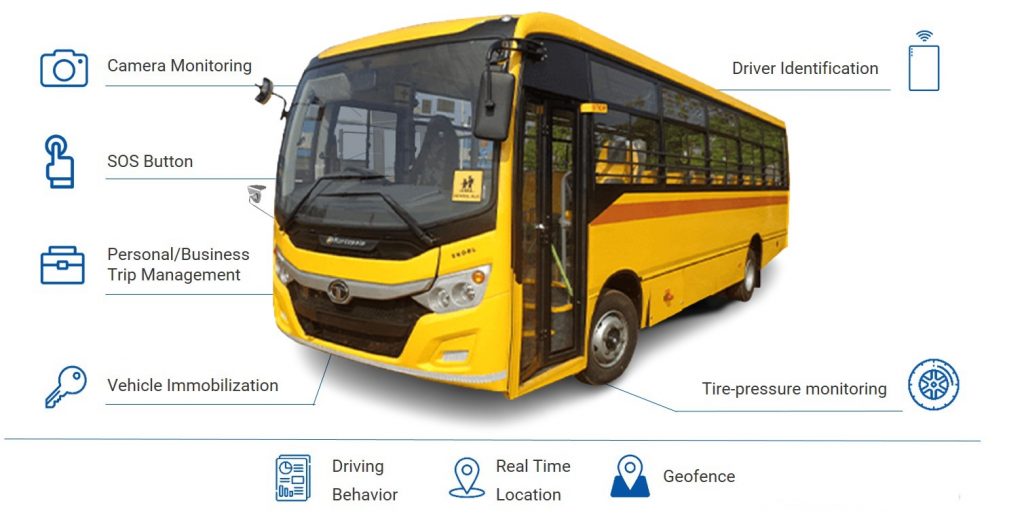
One of the primary benefits of video telematics is enhancing the safety and security of students on school buses. By installing cameras inside and outside the buses, any incidents or accidents can be captured in real-time. This provides a valuable tool for investigating and understanding the causes of accidents, helping prevent similar incidents in the future. Moreover, the presence of cameras acts as a deterrent to unruly behavior and can help de-escalate conflicts among students.
4. Monitoring Driver Behavior
Video telematics allows for the monitoring of driver behavior, ensuring that drivers adhere to traffic rules and regulations. By capturing instances of speeding, harsh braking, or aggressive maneuvers, it becomes possible to address any potential issues and provide training or corrective measures to drivers as needed. This not only improves the safety of the students but also promotes responsible driving practices among the drivers themselves.
5. Improving Fleet Efficiency
Efficiency is a key aspect of managing school bus fleets effectively. Video telematics systems enable fleet managers to optimize routes, monitor fuel consumption, and identify areas for improvement. By analyzing data on idling time, fuel consumption, and maintenance needs, fleet managers can make informed decisions to enhance efficiency, reduce costs, and minimize the environmental impact of school bus operations.
6. Real-Time Monitoring and Alerts
Video telematics provides real-time monitoring capabilities, allowing school administrators and fleet managers to track the location of buses and receive alerts in case of any deviations or emergencies. This ensures a swift response to any unforeseen circumstances, such as breakdowns, accidents, or route deviations. Real-time monitoring also enables proactive communication with parents, keeping them informed about the estimated arrival time of the bus and any schedule changes.
7. Addressing Parental Concerns
Parents are understandably concerned about the safety and well-being of their children while they are on school buses. Video telematics offers peace of mind by providing a transparent view of the journey and the activities inside the bus. Parents can have access to real-time video feeds or receive periodic reports, reinforcing their trust in the school’s commitment to their child’s safety.
8. Compliance with Regulations
Video telematics can assist school bus operators in meeting regulatory requirements and standards. A recent directive from the Ministry of Roads, Transport, and Public Works, requires that all PSVs, school buses should be fitted with dashboard cameras and telematics systems to help in curbing road accidents. By documenting compliance with regulations, such as seat belt usage, maximum passenger capacity, and adherence to traffic rules, video telematics helps ensure that school bus operations are in line with the prescribed guidelines.
9. Data Analysis and Insights
The data collected through video telematics systems can be analyzed to gain valuable insights into various aspects of school bus operations. By examining trends in driver behavior, identifying high-risk areas, and evaluating fuel efficiency, data-driven decisions can be made to optimize operations, enhance safety measures, and improve overall performance.
10. Integrating Video Telematics with Other Systems
Video telematics can be integrated with other systems, such as GPS tracking, student attendance management, and school communication platforms. This integration allows for seamless data sharing and enhances the overall efficiency of school operations. For example, integrating video telematics with student attendance management systems can provide automated reports on students’ boarding and alighting, ensuring accurate records and reducing administrative burdens.
11. Overcoming Challenges and Considerations
Implementing video telematics in school buses comes with its own set of challenges and considerations. These include privacy concerns, data security, infrastructure requirements, and initial investment costs. However, by addressing these challenges proactively and adhering to best practices, the benefits of video telematics far outweigh the challenges.
12. Implementing Video Telematics in Kenya
Kenya’s education system is witnessing significant growth, and the implementation of video telematics in school buses can contribute to the country’s efforts to improve student safety and transportation efficiency. Collaborations between educational institutions, transport authorities, and technology providers can facilitate the smooth adoption and implementation of video telematics solutions tailored to the specific needs of the Kenyan context.
13. Success Stories: Video Telematics in Kenyan School Buses
Several schools in Kenya have already implemented video telematics systems from FleetWatch in their school buses, with encouraging results. These success stories serve as examples of the positive impact video telematics can have on student safety, parental satisfaction, and overall operational efficiency.
14. Future Trends in Video Telematics
As technology continues to evolve, video telematics is expected to witness further advancements. Future trends may include the integration of artificial intelligence and machine learning algorithms for real-time analytics, improved camera resolution and field of view, and enhanced connectivity options. These advancements will further enhance the capabilities and effectiveness of video telematics systems in the context of school bus transportation.
15. Conclusion
Video telematics holds immense potential for improving the safety, security, and efficiency of school bus transportation in Kenya. By leveraging this technology, schools and transport authorities can ensure a safer environment for students, provide peace of mind to parents, and optimize operational processes. The implementation of video telematics, coupled with continuous monitoring and analysis, can contribute to the overall enhancement of the education system in Kenya.
FAQs
1. Is video telematics legal for school buses in Kenya?
Yes, video telematics is legal for school buses in Kenya. However, it is essential to comply with data protection and privacy regulations when implementing such systems.
2. Can video telematics help prevent accidents and improve driver behavior?
Yes, video telematics can help prevent accidents by capturing incidents in real-time and providing insights to improve driver behavior through training and corrective measures.
3. How can video telematics benefit parents?
Video telematics provides parents with real-time visibility into their child’s journey, ensuring transparency, and offering peace of mind regarding their child’s safety.
4. Are there any specific requirements for video telematics systems in school buses?
Video telematics systems for school buses should have high-resolution cameras, GPS tracking, real-time monitoring capabilities, and secure data transmission and storage.
5. What are the future prospects of video telematics in school bus transportation?
The future of video telematics in school bus transportation is promising, with advancements in AI, improved camera technology, and increased connectivity, further enhancing safety and efficiency.